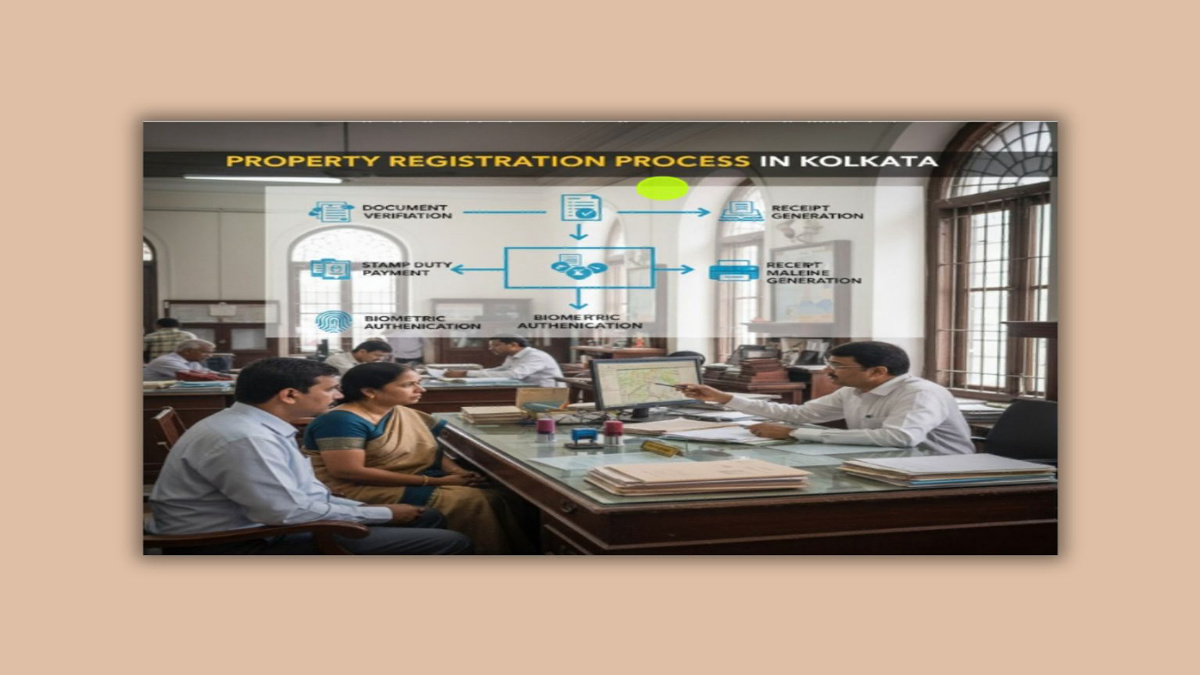
Property Registration Process in Kolkata | Step-by-Step Guide
Buying a flat in Kolkata is a marathon. You battle the brokers, negotiate the price, and finally convince the bank to sanction your loan. You think the war is won? Think again. The final boss battle is the Property Registration at the Additional District Sub-Registrar (ADSR) office.
I have stood in the queues at the Alipore ADSR and the ARA (Additional Registrar of Assurance) office in Kolkata. I have seen people sent back for a spelling mistake in their Aadhaar card or a missing "witness" who went for a tea break. The process in West Bengal is now "online" via the e-Nathikaran portal, but the reality on the ground is very much physical, chaotic, and strict.
This guide isn't copied from a government PDF. This is a step-by-step walkthrough of how to actually get your property registered in Kolkata without losing your mind (or your money).
1. The Pre-Game: Due Diligence (Don't Skip This)
Before you even log into the government portal, you need to be 100% sure the property is clean. In Kolkata, land records can be messy.
The "Search Report"
You need a lawyer to conduct a search at the local registration office for the last 30 years. They check if the property was mortgaged, sold twice, or has a pending court case.
My Advice: Don't rely on the builder's lawyer. They work for the builder. Pay ₹5,000 - ₹7,000 to an independent lawyer for a "Non-Encumbrance Certificate". If you are buying a resale flat, read our Resale Property Guide to understand the specific risks of "Chain Deeds".
2. Understanding e-Nathikaran (The Online Part)
West Bengal's property registration happens through the e-Nathikaran portal (wbregistration.gov.in). You cannot just walk into the office anymore.
Step A: Assessment of Market Value
You need to fill out an e-Assessment form. You enter the location (Mouza, JL No.), the area of the flat, and the amenities. The system calculates the government "Market Value".
The Trap: If you declare a value lower than the government circle rate, the system will flag it. You will have to pay Stamp Duty on the higher of the two values (Transaction Value vs Market Value).
Step B: Stamp Duty Calculation
Once the value is frozen, the system tells you how much to pay.
Stamp Duty Rates (2026):
- Corporation Areas (Kolkata/Howrah): 6% (if value > ₹1 Cr) or 5% (if < ₹1 Cr).
- Panchayat Areas: 5% (if value > ₹1 Cr) or 4% (if < ₹1 Cr).
- Registration Fee: Flat 1.1% of the market value.
Note: Women do not get a concession in West Bengal (unlike in Delhi where they save 2%).
3. Payment via GRIPS (The Money Part)
You cannot pay cash at the office. You must pay online via the GRIPS (Government Receipt Portal System).
The Process:
1. Generate the challan on e-Nathikaran.
2. Log in to GRIPS.
3. Pay via Net Banking (SBI and HDFC are most reliable).
Warning: The server often times out. If the money is deducted but the challan isn't generated, do not pay again immediately. Wait for 24 hours. Refunds from GRIPS can take months.
4. Drafting the Sale Deed (The Legal Document)
While you pay online, the actual Deed is physical. It must be printed on "Demmy" paper (legal green paper).
Who drafts it? A professional Deed Writer (Mohurer) or a Lawyer.
Critical Clauses: Ensure the deed mentions "Transfer of Proportionate Share of Land". Without this, you own the apartment box, but not the land it stands on. This is a common trick in older Kolkata buildings.
5. The Registration Day (The Offline Reality)
You have booked your slot (Appointment). Now you go to the SRO (Sub-Registrar Office).
Locations:
- ARA-I Kolkata: For most Central/South Kolkata properties (near Raj Bhavan).
- ADSR Alipore: For South 24 Parganas areas (Jadavpur, Behala).
- ADSR Rajarhat: For New Town/Salt Lake.
The "Biometric" Queue
Arrive 30 minutes early. The police at the gate will check your Appointment Slip. Inside, it's crowded.
1. Fingerprints & Photos: Both Buyer and Seller must be present. Your fingerprints and iris scans are captured.
2. Witnesses: You need two witnesses. They must have their Aadhaar cards. Usually, the broker or a friend acts as a witness.
3. The "Query": The Registrar might ask the seller, "Have you received the full payment?" The seller must say "Yes" loudly. If there is a pending payment, the registration stops.
The "Tea Money" Issue
Let's be real. The clerks (Muhurirs) handling your file might delay things. They might say "Server Down" or "Signature Mismatch". Usually, your deed writer handles this "smooth operation" fee. It's frustrating, but it's part of the ecosystem.
6. Post-Registration: Mutation (The Final Step)
Walking out with the "I GR" (Inspector General Receipt) isn't the end. You are the owner, but the government doesn't know it yet until you do Mutation.
KMC vs BLRO Mutation
In Kolkata, you might need two mutations:
1. KMC Mutation: For the building/flat. This ensures property tax bills come in your name.
2. BLRO Mutation: For the land. This is crucial if you ever want to sell the property later.
If you are renting it out, your tenant will need the Mutated Tax Bill for their Rental Agreement police verification.
7. Total Cost Breakdown (Example)
For a flat worth ₹50 Lakhs in Jadavpur (Kolkata Municipal Area):
| Head |
Rate |
Amount |
| Stamp Duty |
5% |
₹2,50,000 |
| Registration Fee |
1.1% |
₹55,000 |
| Legal / Deed Writer |
Fixed |
₹10,000 - ₹15,000 |
| Misc Expenses |
- |
₹2,000 |
| Total Extra Cost |
~6.2% |
₹3,17,000 |
8. The "Middleman" Reality: Do You Need a Broker?
In Kolkata, you can technically do everything yourself. But should you?
The Case for DIY: You save 1-2% brokerage. If you are buying directly from a reputed builder (Godrej, Merlin, Siddha), their sales team handles the registration. You don't need a separate broker.
The Case for a Broker: If you are buying a resale flat in an old building (30+ years), you need a local broker. Why? Because old buildings often have missing "Chain Deeds" or "Mother Deeds". A good broker knows the local councilor and the SRO staff. They can "fix" minor paperwork issues that would otherwise get your application rejected.
Cost: A registration agent (not a property broker) charges around ₹5,000 - ₹10,000 to handle the slot booking, challan generation, and queuing.
Scams to Avoid
1. The "Express" Fee: Touts outside the SRO will promise to get you done in 10 minutes for ₹2,000. Don't pay. The biometric system is server-linked; they cannot speed it up.
2. The "Fake" Stamp Paper: Always verify the e-Stamp challan number on the GRIPS portal before paying the seller. Fake challans are rare now but not impossible.
9. Common Rejection Reasons (And How to Fix Them)
I have seen families crying outside the office because their registration was cancelled at the last minute. Don't be them.
Reason 1: Name Mismatch
Your Aadhaar says "S. Kumar" but the Deed says "Sunil Kumar".
Fix: Ensure the Deed name matches your ID proof exactly. If there is a discrepancy, carry a notarized affidavit (Same Name Affidavit) on ₹10 stamp paper.
Reason 2: PAN Card Issues
If the property is over ₹10 Lakhs, PAN is mandatory. If the seller's PAN is not linked with Aadhaar (inoperative), the system might reject the TDS filing.
Fix: Check the seller's PAN status on the Income Tax portal before paying the token money.
Reason 3: Boundary Mismatch
The "Schedule of Property" in your deed mentions "North: Road". But in reality, there is a building.
Fix: This happens in resale flats. Visit the spot. If the schedule is wrong, the deed is defective. You will face issues during a future bank loan. Correct it in the draft stage.
10. NRI Buyers: Special Rules for Kolkata
Kolkata has a huge NRI buyer base (mostly from UK/USA). If you are one, the rules are stricter.
- No Cash: You cannot pay even ₹1 in cash. All money must come from an NRE/NRO account.
- RBI Reporting: After purchase, you must file Form IPI with the RBI within 90 days. Most lawyers forget this.
- TDS @ 20%+: If you are buying FROM an NRI, you must deduct TDS at roughly 20-23% (including cess), not 1%. If you get this wrong, the Income Tax department will send YOU a notice, not the seller.
Conclusion: Don't Do It Alone
I have seen smart people try to save ₹10,000 by doing the registration themselves, only to get stuck in the "Query" stage for months. Hire a good local advocate. The peace of mind is worth the fee. Kolkata's property laws are old and complex (Thika Tenancy Act, anyone?). Navigate them with a guide, not a map.
If you are just moving to the city, check our Kolkata Rental Survival Guide first. Buying is a big step; renting is the trial run.
Frequently Asked Questions (FAQs)
How long does it take to get the original deed?
It used to take years. Now, with the scanning system, you usually get the original deed delivered to your address or the lawyer's office within 3 to 6 months. Keep the "I GR" receipt safe; it is your temporary ownership proof.
Can I pay Stamp Duty by Cheque?
No. Physical instruments are largely phased out. You must use the GRIPS portal (Net Banking/Debit Card). For amounts over ₹5 Lakhs, use RTGS via the GRIPS generated challan.
Is TDS applicable on property purchase?
Yes. If the property value is ₹50 Lakhs or more, you must deduct 1% TDS (Form 26QB) and pay it to the Central Government. This is separate from State Stamp Duty. Don't forget this, or you will get an Income Tax notice.
What if the seller is an NRI?
The process is harder. The seller needs to give a Power of Attorney (POA) to someone in Kolkata, and that POA must be "Adjudicated" in West Bengal. Banks are also very strict about TDS (usually 20%+) for NRIs. Consult a Chartered Accountant (CA) before paying a token.
Does a "Power of Attorney" sale work in Kolkata?
Legally? No. You cannot transfer title via GPA. You might "possess" the flat, but you can't sell it later. Always insist on a registered Conveyance Deed (Kobala). See our Legal Documents Guide for more details.