Rent Agreement Rules & Charges in Delhi: A 2026 Guide
In Delhi, a verbal promise is worth less than a Metro token. If you are renting a flat in Laxmi Nagar, Saket, or Best Areas like Dwarka, the "Rent Agreement" is the only thing standing between you and a sudden eviction. Landlords here can be sweet one day and aggressive the next. "Trust" is a dangerous word in the capital's real estate market.
This guide covers the ground reality of making a Rent Agreement in Delhi—what costs to expect, the "Police Verification" headache, and why a Notary is not enough. Whether you are a student looking for a PG in North Campus or a family shifting to Vasant Kunj, this document is your legal shield.
1. Notarized vs. Registered Agreement: The Delhi Trap
This is the most common confusion for tenants. Most brokers will tell you: "Sir, just get a ₹50 Stamp Paper, we will Notarize it. It saves money."
Don't fall for it blindly. Understand the difference:
The Notarized Agreement (The 11-Month Standard)
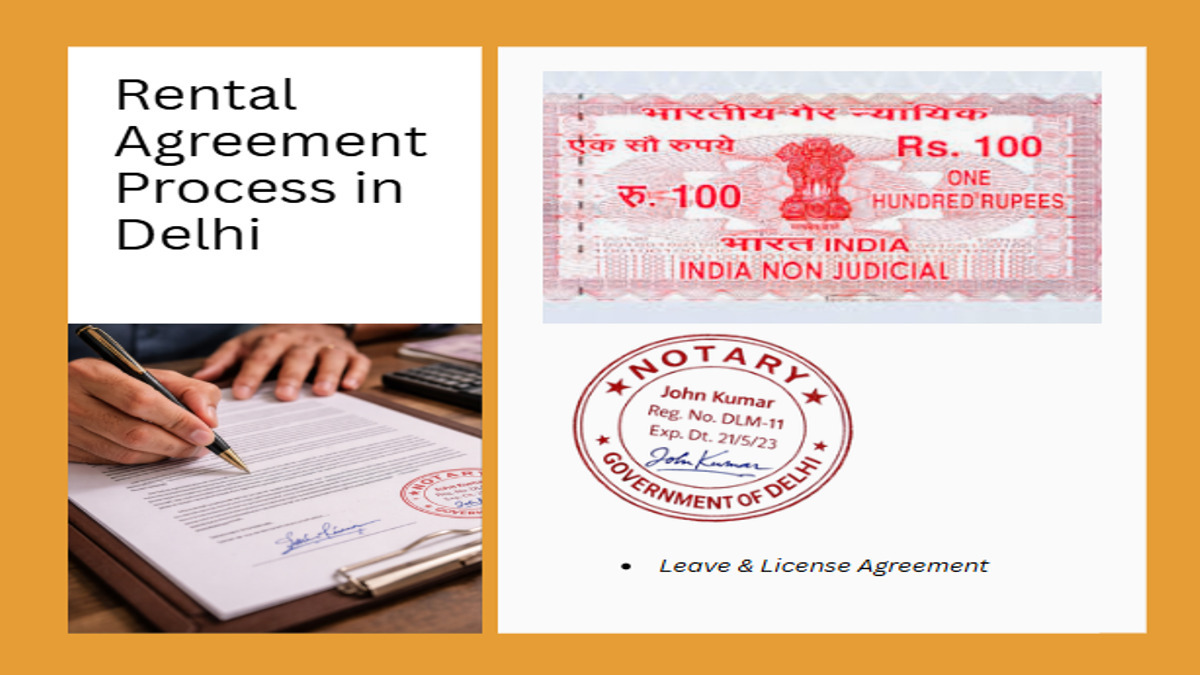
A Notarized Agreement is merely a document attested by a Public Notary. It proves that "Person A" and "Person B" signed the paper. It does not validate the content of the agreement.
- Validity: It is generally made for 11 months to avoid Stamp Duty.
- Legal Standing: Weak. In case of a dispute, courts often do not accept it as primary evidence for tenancy rights, though it works for collateral purposes.
- Usage: Accepted for Address Proof (Aadhaar, Passport), Gas Connection, and Police Verification.
- Cost: Cheap (₹300 - ₹500).
The Registered Agreement (The Gold Standard)
This document is registered at the Sub-Registrar's Office (SRO), similar to the Property Registration Process. The government has a record of your tenancy.
- Validity: Mandatory for any lease period of 12 months or more.
- Legal Standing: Strong. If the landlord locks you out illegally, this document is your weapon in court.
- Cost: High (Stamp Duty + Registration Fee).
Rule of Thumb: If you are paying a heavy deposit (above ₹50,000) or renting for long-term, INSIST on a Registered Agreement. For standard 11-month stays with low deposit, the Notarized one is the "Delhi Market Standard."
2. Stamp Duty Charges in Delhi (2026)
Delhi has specific rates for Stamp Duty. Calculating this correctly prevents future penalties.
For Registered Agreements (Lease > 11 Months)
| Lease Period |
Stamp Duty Rate |
| Up to 5 Years |
2% of the Average Annual Rent |
| 5 to 10 Years |
3% of the Average Annual Rent |
| Security Deposit |
Included in calculation if refundable? No. But often calculated on total consideration. |
Plus Registration Fee: Approx ₹1,100.
For Notarized Agreements (11 Months)
Technically, even 11-month agreements attract stamp duty, but in practice, people use minimum value stamp papers.
- Stamp Paper: ₹50 or ₹100 (e-Stamp paper from Stock Holding Corp).
- Notary Charge: ₹300 - ₹500 (Lawyer's fee).
- Broker's "Service Charge": They might ask for ₹1,000 to "make the agreement." Negotiate this. It is just a copy-paste job for them.
3. Police Verification: It is NOT Optional
In Delhi, Police Verification of tenants is Mandatory by Law (Section 188 IPC). If a landlord fails to do this, they can be fined or even jailed. This rule is strictly enforced in areas like Mukherjee Nagar, Munirka, and Batla House.
Why you need it:
- Safety Shield: It proves you are a verified resident. If there is a theft in the building, the police won't harass you just because you are a "new outsider."
- Essential Services: You cannot get a new Indane/IGL gas connection or update your Aadhaar address without the Police Verification Report (PVR).
The Process (Online & Easy)
Gone are the days of bribing the local constable. The process is now online via the Delhi Police Website.
- Step 1: Landlord logs in to the portal.
- Step 2: Uploads Tenant's Photo, Aadhaar, and Rental Agreement.
- Step 3: Police verify the criminal record (backend process).
- Step 4: A "Police Clearance Certificate" is generated. Save this PDF.
What if the landlord refuses? Some lazy landlords say "Chhodo na sir" (Leave it). Explain to them that it is for THEIR safety. If they still refuse, send them a formal email stating you requested it, to protect yourself legally.
5. Critical Clauses Every Tenant Needs
Do not sign a standard "broker format" agreement. It protects the landlord, not you. Ensure these 5 clauses are present:
1. The "Lock-in Period" Clause
This defines the minimum stay (e.g., 6 months). If you leave early, you lose your deposit.
Negotiation Tip: Try to keep the lock-in period zero or maximum 3 months. Life is unpredictable; don't get trapped.
2. The "Maintenance Charge" Definition
Who pays the society maintenance? Usually, it is the tenant. But what about "Sinking Fund" or "Major Repairs" (like lift replacement)? That should be the Landlord's cost. Clarify this in writing.
3. The "Painting & Cleaning" at Exit
Many landlords demand one month's rent for "whitewash" when you leave.
The Fix: Add a clause: "The tenant shall return the property in the same condition as received, subject to normal wear and tear. No painting charges shall be deducted unless there is deliberate damage."
4. The "Guest Policy"
In Delhi, some landlords act like hostel wardens. "No guests after 10 PM."
The Law: A landlord cannot dictate your personal life. However, to avoid fights, clarify if guests/partners are allowed overnight.
5. The "Notice Period"
Standard is 1 month. Some landlords try to make it 2 or 3 months. Stick to 1 month. It gives you flexibility.
6. Bachelor vs. Family: The RWA Headache
If you are single in Delhi, finding a house is harder than finding a job. RWAs (Resident Welfare Associations) often ban bachelors illegally.
The Legal Stance: The Supreme Court has ruled that RWAs cannot ban tenants based on marital status, religion, or food habits.
The Reality: They still do it. If you face harassment, you can file a complaint with the "Registrar of Societies." But practically, it is better to rent in "Bachelor-Friendly" zones like Mukherjee Nagar, U-Block DLF (Gurgaon border), or pockets of Lajpat Nagar.
7. Digital Rent Agreements: The New Way
Hate visiting the Notary? You can now do it online.
Platforms like NoBroker, MagicBricks, and Housing.com offer "e-Rent Agreements."
How it works:
- Fill details online.
- Pay Stamp Duty + Service Fee (approx ₹300).
- Biometric sign (Aadhaar eSign) by both parties.
- Receive the digital PDF.
Is it valid? Yes, under the IT Act, e-agreements are legal. However, for 12+ months lease (Registration), you still have to visit the SRO physically.
8. Commercial vs. Residential: Different Rules
If you are renting a shop in Karol Bagh or an office in Nehru Place, the rules change.
1. GST Impact
For residential renting, there is NO GST (unless rented to a business entity).
For commercial renting, if the annual rent exceeds ₹20 Lakhs, the landlord must charge 18% GST on top of the rent. As a tenant, ensure you get a GST invoice to claim Input Tax Credit.
2. Lease Duration
Commercial leases are usually 3 to 9 years (often 3+3+3). They always require Registration. Notarized agreements are useless for GST registration or company incorporation.
9. The "11-Month" Loophole Explained
Why does every broker suggest 11 months? Why not 12?
The Law: Section 17 of the Registration Act, 1908 states that any lease of immovable property for a term exceeding one year must be registered.
The Loophole: By keeping it at 11 months, you bypass Section 17. You save 2% Stamp Duty and the Registration Fee. It is a legal workaround, but it leaves you with a weaker document.
10. Student Housing: PG vs. Flat
Delhi is a student hub (DU, JNU, Jamia). Students often face the "No Agreement" trap.
The PG (Paying Guest) Reality
Most PGs in areas like Vijay Nagar or Satya Niketan run on cash. Landlords refuse to give a written agreement to save tax.
The Risk: Without an agreement, they can increase rent mid-session or keep your security deposit.
Advice: Even if it's a PG, ask for a "Receipt" on a letterhead stating the security deposit amount. It is better than nothing.
Renting a Flat as Students
If 3-4 students rent a flat together, ALWAYS put all names on the Rent Agreement.
Why? If one student leaves, the others shouldn't be liable for his share of the rent. A "Joint Liability" clause can be dangerous, so read it carefully.
Conclusion
A Rent Agreement is not just a formality; it is your peace of mind. In a city as fast-paced as Delhi, verbal deals are forgotten in a week. Spend that extra ₹500 on a proper draft. Ensure the lock-in period, notice period, and exit clauses are clear. A solid agreement today prevents a court case tomorrow. Remember, the law favors the vigilant, not the trusting.
Buying your own place soon? Check our Resale Property Guide to avoid scams. Need help with moving? Read about Rental Procedures in other cities.
Frequently Asked Questions (FAQs)
What if the landlord refuses to return the deposit?
If you have a Registered Agreement, you can file a case in the Rent Control Court. If it's Notarized, you can send a Legal Notice via a lawyer (costs ₹2,000). Usually, a legal notice scares them enough to pay up.
Can a bachelor get a Rent Agreement in a family society?
Yes, legally no RWA can ban bachelors. However, they can impose "nuisance" rules. Ensure your agreement explicitly allows you to live there to avoid RWA harassment.
Is PAN card mandatory for Rent Agreement?
Yes, for both Landlord and Tenant. If the annual rent exceeds ₹1 Lakh, the landlord's PAN is mandatory for you to claim HRA exemption.