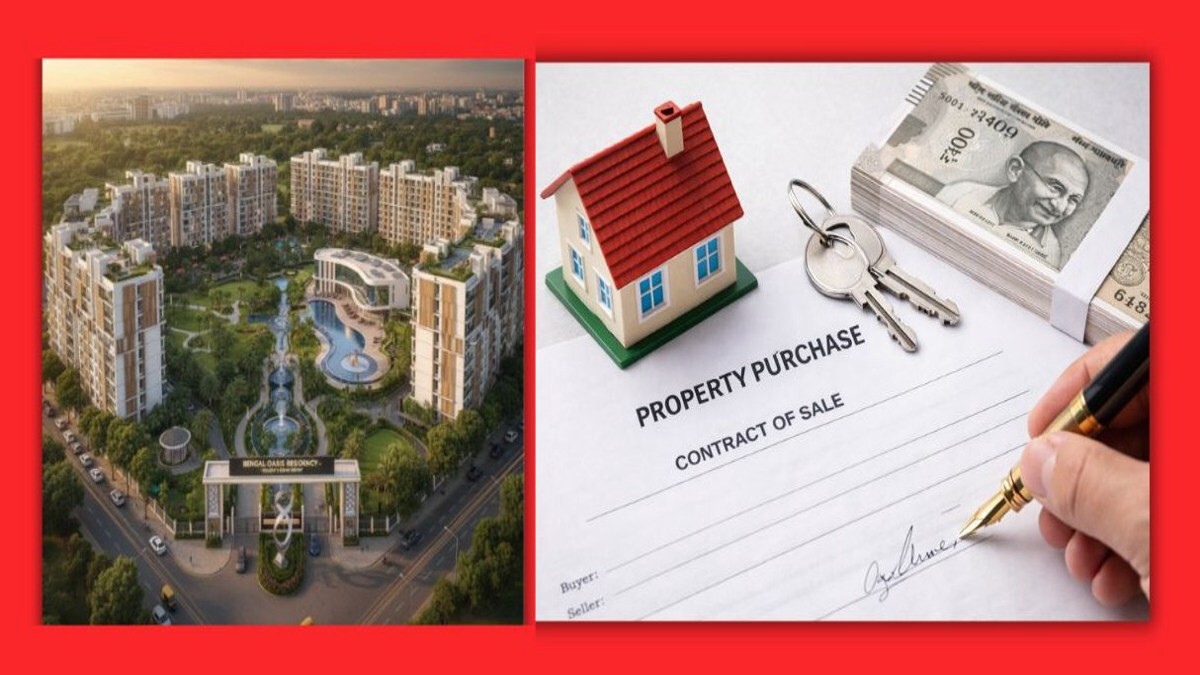
Buying a flat in Kolkata is a different ballgame compared to the corporate-style markets of Gurgaon or Bangalore. Here, we don't just deal with builders; we deal with "Promoters," "Syndicates," and a legal system that still uses terminology from the 1800s. I have seen smart people from IT backgrounds get absolutely duped because they applied "corporate logic" to "Para (neighborhood) logic."
Whether you are looking at a shiny high-rise in New Town or a standalone building in Behala, the traps are the same. This is your street-smart, step-by-step guide to buying property in the City of Joy without killing your joy.
Step 1: The Budget (The "Hidden" 20%)
First, stop looking at the "Base Price." In Kolkata, the base price is just the bait.
The Real Cost Equation:
Base Cost + Car Parking (₹3L - ₹6L) + GST (5% for Under Construction) + Stamp Duty (7%) + Registration (1.1%) + CESC Meter Charges + "Association Corpus Fund."
Reality Check: If your budget is ₹60 Lakhs, look for flats listed at ₹45-48 Lakhs. The rest will get eaten up by these extras. I explain the detailed breakdown in our Registration Charges Guide.
The "Super Built-up" Scam (SBU)
Kolkata has the highest "Loading Factor" in India (often 30-35%).
Math: You pay for 1000 sq ft. You get 650 sq ft inside your door. The rest is "Common Area" (Stairs, Lobby, Roof).
Advice: Don't just trust the brochure; bring a physical measuring tape to the site visit. Measure the "Carpet Area." That is the only space you will actually live in. Do not pay for "Flower Beds" or "Service Ledges" that you cannot access.
Step 2: Location Hunting (The "Water" Test)
Kolkata has a unique problem: Waterlogging. A beautiful road in April can look like a canal in July.
A. The "Rickshaw Wallah" Test
Don't ask the broker if the area floods. He will lie. Go to the local Rickshaw stand or a Tea Stall nearby.
Ask: "Dada, borshakale jal jome?" (Does water log here in monsoon?). They will tell you the truth.
Red Zones: Parts of Thanthania, Amherst Street, and certain pockets of Mukundapur are notorious. Even in "posh" areas like Lake Gardens, specific lanes go under water for 2 days.
B. New Town vs. South Kolkata
New Town/Rajarhat: Great infrastructure, wide roads, but "soulless" at night. Water supply is often from tankers in newer blocks.
South Kolkata (Garia/Tollygunge): Congested, older vibes, but you get KMC water (sweet water) and Metro connectivity. Read our Living in Kolkata Guide to decide which lifestyle fits you.
Step 3: Legal Verification (The "Search Report")
You found a flat. You love it. The broker wants a "Token." STOP.
Do not pay a single rupee until you see the papers.
1. The "Chain Deeds" (30 Years)
In West Bengal, you need to trace the ownership back 30 years.
The Risk: Often, the land belonged to a joint family. One brother sold it to the promoter, but the other three sisters didn't sign. 10 years later, the sisters file a case, and your building gets a stay order.
The Solution: Demand the "Search Report" from a lawyer. It should confirm that the title is clear and marketable.
2. BLRO Mutation (The "Pukur" Scam)
Check the "Parcha" (Land Record).
Classification: The land must be "Bastu" (Homestead).
The Scam: Promoters fill up ponds ("Pukur" or "Doba") and build on them. This is illegal. If the Parcha says "Sali" (Agricultural) or "Doba" (Water body), run away. The government can demolish it anytime, and banks will NOT fund these projects.
Step 4: The Agreement to Sale (ATS)
This is the document you sign when you pay the booking amount (usually 10% or 20%).
Warning: Promoters in Kolkata love to slip in a clause: "Super Built-up Area is tentative and may increase."
The Fix: Ensure the Carpet Area is fixed. If they increase the Super Built-up area later (to charge you more maintenance), you can fight it. Check our Agreement to Sale Guide for the exact clauses to check.
The "Possession Date" Clause
Under WBHIRA (now RERA), builders must pay interest for delays. But they try to hide this. Ensure the agreement has a specific date, e.g., "June 2026," not "36 months from start of construction." "Start of construction" is a vague term they can manipulate.
Step 5: The Home Loan (The Ultimate Filter)
Even if you are sitting on a pile of cash, I strongly advise taking a small home loan. Why?
The "APF" Number: Banks like SBI or HDFC do technical due diligence before approving a project (APF - Approved Project Financials).
The Hack: Ask the builder, "Is this project SBI approved?" If he says, "No, but we have tie-up with [Obscure Co-operative Bank]," be very suspicious. SBI's legal team is stricter than any lawyer you can hire. If SBI rejects a project, there is usually a massive legal flaw (like the Pukur issue).
Step 6: Registration (The "Dalal" Reality)
Once the building is ready (or if it's a resale), you go to the ADSR (Additional District Sub-Registrar) office.
In Kolkata, you cannot do this alone. You need a "Muhurir" (Law clerk).
The Cost: They will ask for "Scanning Charges," "Tea Money," and "Speed Money." It's an open secret. Budget roughly ₹10,000 - ₹20,000 for these "incidental" expenses over and above the official fees. See the exact steps in our Property Registration Process.
The "Server Down" Drama
Registration offices in Kolkata (especially Alipore and Sealdah) are notorious for "Server Down" issues, usually around 1:30 PM (Lunch Time).
Tip: Pay the Muhurir extra to get the first slot (10:30 AM). If you get stuck in the afternoon slot, you might be there until 6 PM. Bring water and snacks; the waiting rooms are crowded and hot.
Step 7: Mutation (The "Tax" Name Change)
Registration gives you the Title. Mutation gives you the Electricity Bill in your name.
KMC vs Panchayat:
If you are in KMC (Kolkata Municipal Corp) area, mutation is expensive but adds value. You get a KMC Tax Receipt.
If you are in a Panchayat area (like parts of Rajarhat), mutation is cheap, but the civic amenities (drainage, garbage collection) are often poor.
Separation of Mutation: In KMC, mutation is now often "Auto-Triggered" after registration, but you still need to follow up for the hard copy certificate.
Critical "Gotchas" in Kolkata Real Estate
Here are the things nobody puts in the brochure.
1. The "Resale Transfer Fee"
If you are buying a Resale Flat in a Co-operative Housing Society, the Society will demand a "Transfer Fee" or "Donation."
The Cost: It can be 1% to 2% of the sale value.
The Law: Legally, this is capped at ₹25,000 (Supreme Court ruling).
The Reality: Societies ignore the law. They won't give you the NOC (No Objection Certificate) unless you pay. Negotiate this with the Seller: "Who pays the Society Transfer Fee?"
2. The "Syndicate" Issue
If you are buying a plot to build a house, be warned. In many areas, local "Syndicates" force you to buy construction materials (sand, cement) from them at 2x the market price. This is a sad reality of West Bengal construction. Buying a readymade flat is safer than building your own for this reason.
3. CESC Meter Transfer
After buying, you need to transfer the CESC meter. If the previous owner had pending bills, CESC will not give you a new connection until YOU pay the dues. Always check the last 6 months' electricity bills before signing the deed.
4. GST on Maintenance
If your monthly maintenance bill crosses ₹7,500, you have to pay 18% GST on the entire amount.
Tip: In high-end complexes (like South City or Urbana), this is common. In smaller standalone buildings, maintenance is usually ₹2,000 - ₹3,000, so no GST. Factor this into your monthly outflow.
Comparison: Why Kolkata?
Despite the chaos, Kolkata is affordable.
| Factor |
Kolkata |
Delhi/NCR |
| Price/Sq Ft (Avg) |
₹4,500 - ₹7,000 |
₹8,000 - ₹15,000 |
| Registration Fee |
1.1% (High) |
1% (Standard) |
| Legal Clarity |
Low (Old Deeds) |
High (DDA/Authority) |
For a deeper comparison, read our Delhi vs Kolkata Real Estate Guide.
Conclusion: Don't Be Emotional
Kolkata plays on emotions. "This flat faces the Ganges," "This is near your old school." That's how they sell.
But you must be cynical. Check the papers, check the waterlogging, and check the loan eligibility. A property is an asset only if it's legally clean. If it's disputed, it's a liability that will haunt you for generations.
Take your time. Drink some "Cha." And negotiate hard. If the broker pushes you to "Close today," walk away. The deal of a lifetime comes every week in this market.
Frequently Asked Questions (FAQs)
What is the GST rate for flats in Kolkata?
For "Affordable Housing" (under ₹45 Lakhs & 60 sq m), GST is 1%. For other under-construction flats, it is 5%. There is NO GST on ready-to-move resale flats.
Can I buy property in Kolkata as an NRI?
Yes, but the paperwork is tricky. You don't need to be here, but your "Power of Attorney" (POA) must be Adjudicated in India. A simple US/UK Notary stamp is invalid here. The Registrar will reject it. Pay via NRE/NRO accounts only.
Is "Covered Parking" mandatory?
No, but highly recommended. In Kolkata's monsoon, open parking means your car will rust or get water damage. Builders charge ₹3-5 Lakhs extra for covered parking, but it affects resale value significantly.
How long does property registration take?
The actual process at the SRO takes about 1-2 hours (biometrics and photos). However, getting the appointment and preparing the deed takes about 1 week. You get the original deed back after scanning, which can take anywhere from 1 month to 1 year depending on the SRO speed.
What is the difference between KMC and Panchayat areas?
KMC (Kolkata Municipal Corporation) areas like Alipore or Tollygunge have better drainage, water supply, and street lights, but property tax is higher. Panchayat areas (like parts of Rajarhat or Joka) have cheaper property tax but often struggle with waterlogging and lack of piped water.