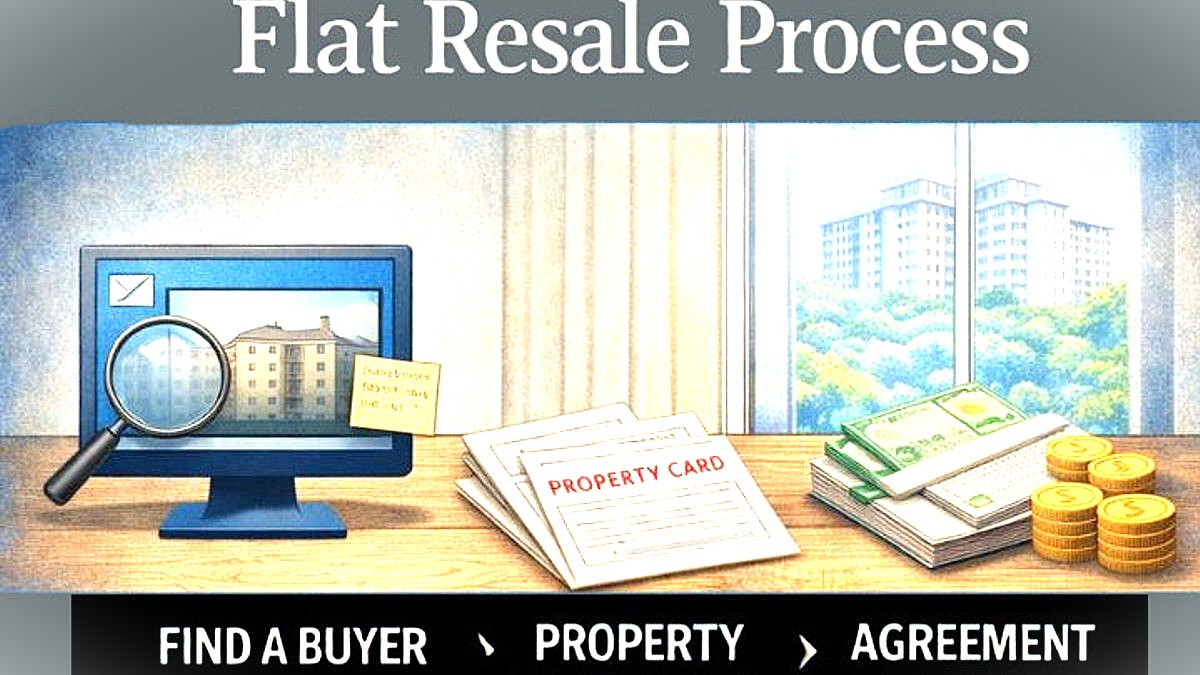
Flat Resale Process in Pune – Step-by-Step Guide
Buying a brand-new flat from a builder is easy—they have a team to handle the paperwork. Buying a Resale Flat in Pune? That is where the real work begins. You are not just buying a home; you are buying the history of that home. If that history has a single gap, you are in trouble.
In Pune's mature markets like Kothrud, Aundh, Viman Nagar, Sahakar Nagar, and Wanowrie, resale flats are often a better deal than new launches. You get bigger carpet areas (thanks to older construction rules where "loading" was lower) and immediate possession. But the process is a minefield of missing documents, society politics, hidden renovation costs, and parking wars. This guide is not legal theory; it is the street-smart reality of how resale deals actually close in Pune.
1. The "Chain of Documents" (The Deal Breaker)
Before you pay a single rupee as "Token Money," ask for the Chain of Documents. This is the single most important step. If you get this wrong, you lose your property.
What is the Chain?
If Mr. Patil (Seller) bought the flat from Mr. Joshi in 2015, and Mr. Joshi bought it from the Builder in 2010, you need every single link in this history:
- Link 1: The original Builder → Mr. Joshi Agreement (2010).
- Link 2: The Mr. Joshi → Mr. Patil Agreement (2015).
- Link 3: Registration Receipts and Index II for BOTH deals.
The Pune Reality Check: Often, sellers say, "I lost the first agreement (Builder to Joshi), but I have the latest one which proves I am the owner."
STOP immediately. No nationalized bank (SBI, HDFC, ICICI) will give you a Home Loan without the full chain. If a link is missing, the owner must file a police FIR, issue a public notice in newspapers, and get a "Certified Copy" from the SRO. Do not accept a "Notarized Affidavit" as a substitute for the original deed. It holds zero value in court.
2. Document Checklist: What You REALLY Need
Don't just rely on the lawyer. Check these yourself during your first visit. If one is missing, your loan will get stuck and your token money might get locked.
For the Buyer (You)
- PAN Card & Aadhaar Card: Mandatory for TDS and Registration. Ensure the spelling matches exactly.
- Loan Sanction Letter: Don't sign the final deal until the bank gives you the "Sanction Letter" (not just "In-Principle" approval).
- Form 26QB (TDS): Proof that you paid the 1% TDS (for deals > ₹50L).
For the Seller (Owner)
- Original Share Certificate: This is the heart of a resale deal. It proves membership in the Society. If it's lost, they need to issue a duplicate before the sale. Check if the "Parking Slot Number" is mentioned on it.
- Latest Electricity Bill: Must be in the Owner's name. Check for arrears.
- Property Tax Receipt (Nil Balance): Ensure all PMC/PCMC taxes are paid till date. In Pune, property tax attaches to the property, not the person. If the previous owner didn't pay for 5 years, YOU will have to pay it.
- Society NOC (No Objection Certificate): Stating no dues pending and permission to sell.
- Loan Closure Letter (if applicable): If they had a loan, you need the "No Dues Certificate" and the original documents back from their bank.
3. The "Parking Slot" Trap (Hidden War)
In Pune, a covered car park is often more valuable than the flat itself. But this is where the biggest scams happen in resale deals. Always verify the Stamp Duty paid on the original agreement to see if parking was included.
The "Allotted" vs. "Sold" Confusion
Many old societies (pre-2010) have "Allotted Parking." This means the parking belongs to the Society, and they let the owner use it. It is not owned by the flat owner. When the flat is sold, the Society has the right to shuffle parking slots. You might end up with a slot 500 meters away from your wing.
The Check: Look at the Share Certificate or the Original Purchase Deed. Does it explicitly say "Stilt Parking No. X"? If it only says "Open Parking as per availability," you are walking into a trap. Clarify this with the Society Chairman before paying the token.
4. Structural Reality Check (Don't Buy a Money Pit)
Resale flats offer great space, but they come with "age issues." A fresh coat of paint often hides a nightmare. Be a detective during your visit.
The "Leakage" Test
Don't just look at the internal walls. Go to the exterior of the building. Look at the wall specifically outside the bathroom and kitchen of the flat you are buying. Are there damp patches? If yes, the internal plumbing is leaking. Fixing concealed GI (Iron) pipes in an old flat requires breaking the entire bathroom. Cost: ₹50,000 to ₹1 Lakh per bathroom. Factor this into your price negotiation.
The "Enclosed Balcony" Risk
Pune folks love covering their balconies to extend the living room. It looks great. But is it legal?
The Bank Risk: When the Home Loan Valuer visits, they will measure the carpet area as per the approved plan. They will exclude the illegal enclosed balcony area from the valuation. This means your loan amount will decrease, and you will have to pay more cash (Down Payment).
5. The "Token" and "MOU" (Memorandum of Understanding)
Once the price is fixed, you pay a "Token" (usually ₹50,000 to ₹1 Lakh).
Crucial Step: Do not just give a cheque. Sign a "MOU" (Memorandum of Understanding) or "Sathe Khat" (Agreement to Sell).
Why the MOU Matters (Human Logic)
In hot markets like Baner or Kharadi, sellers often get a better offer after taking your token. Without an MOU, they will just return your cheque and say "Sorry."
What the MOU Must Say:
- Total Price & Payment Schedule: "Buyer will pay X amount by Y date."
- List of Furniture: If it's furnished, list every AC, fan, geyser, and sofa. Otherwise, you might find an empty flat on possession day. Take photos and attach them to the MOU.
- The "Gazumping" Clause: If the Seller backs out, they must return the token Double the Amount or with 18% interest. This fear keeps them loyal to the deal.
- Token Forfeiture: If YOU (Buyer) back out without a valid reason (like loan rejection), the seller keeps the token. This is fair play.
6. The Society NOC & Transfer Charges (The Big Hurdle)
In Pune, the Cooperative Housing Society (CHS) is a powerful entity. You need their NOC (No Objection Certificate) to finalize the sale.
The "Interview" Reality
Some societies in Pune are notorious for their "Interviews." They may informally screen you based on eating habits (Veg/Non-Veg), family status (Bachelor/Family), or profession. While legally questionable, in reality, fighting them before you move in is a bad start. Meet the Secretary early in the process.
The "Transfer Premium" Dispute
The Legal Rule: Under the Maharashtra Cooperative Societies Act, the "Transfer Premium" cannot exceed ₹25,000.
The Ground Reality: Many societies in premium areas (like Kalyani Nagar or Koregaon Park) demand ₹50,000, ₹1 Lakh, or even more as a "Voluntary Donation" to the Building Fund.
Advice: If you fight them with the law, they might delay your paperwork. Usually, the Seller and Buyer split this "donation" 50-50 to keep the peace. It's unfair, but it's how deals close.
7. Local Office Guide: Surviving the SRO
Registration day at the Sub-Registrar Office (SRO) is not a corporate meeting. It's a government office. Be prepared. For a detailed guide on what happens inside, check our Property Registration Process article.
- Haveli Offices (Pune): Most Pune registrations happen in "Haveli" offices. They are crowded, hot, and chaotic.
- Server Down Reality: The SRO servers (iSarita) often slow down after 12 PM. Book the 10:00 AM slot. Be the first in line. If the server goes down, you might be stuck there till 7 PM.
- The "Original" Demand: Unlike builder deals, for Resale, the officer may ask to see the Original Previous Sale Deed. Ensure the seller brings it to the office, not just a photocopy.
- Witnesses: You need two witnesses with Aadhaar cards. Don't rely on finding random people there; bring friends.
8. Home Loan Valuation (The LTV Trap)
If you need a loan, know this: Banks do not fund 80% of the "Market Price." They fund 80% of the Valuation Report.
If you are buying a flat for ₹80 Lakhs, but the bank's valuer thinks the building is old (depreciation) and worth only ₹70 Lakhs, the bank will give you a loan based on ₹70 Lakhs. The gap? You have to pay from your own pocket.
See our Home Loan Guide for more on APF and technical checks.
9. TDS @ 1% (The Buyer's Responsibility)
If the property value is ₹50 Lakhs or more, YOU (the buyer) must deduct 1% TDS from the payment to the seller.
Example: Deal is ₹60 Lakhs. You pay the seller ₹59.4 Lakhs. You deposit ₹60,000 to the Income Tax Department using Form 26QB.
Warning: If you forget this and pay the full amount to the seller, the Income Tax notice comes to YOU, not the seller. The seller has no liability here.
10. The "Deemed Conveyance" Factor (For Old Buildings)
If you are buying in a building that is 15-20 years old, check one thing immediately: Does the Society own the land?
Many older societies in Pune still don't have the "Conveyance Deed" from the original builder. This means the building belongs to the society, but the land belongs to the builder.
Why it matters: When the building goes for Redevelopment (which is inevitable for old buildings), the builder who owns the land will demand a huge cut, reducing the benefits for flat owners. A society with "Deemed Conveyance" done is a goldmine; one without it is a headache. Ask the Secretary: "Is Conveyance done?" Also, consider the Future Infrastructure plans for the area to assess long-term appreciation.
11. Post-Sales: The Final Mile
Registration is done. You have the keys. But you aren't done yet.
- Share Certificate Transfer: Submit the Index II and Sale Deed copy to the Society. They will endorse your name on the back of the original Share Certificate. This is your proof of membership.
- Electricity Meter (MSEDCL): Apply online or visit the MSEDCL office to change the name on the bill. You need the Index II and NOC.
- Property Tax (PMC/PCMC): Visit the local Ward Office to change the name on the Property Tax bill. This ensures you are liable for tax from the date of purchase, not for the seller's past dues.
Conclusion
Buying a resale flat in Pune gives you the advantage of seeing exactly what you are getting—the view, the neighbors, the water supply. But the paperwork is heavy. The "Chain of Documents" is your bible, the Parking Slot is your battleground, and the Society NOC is your gate pass. Don't skip the legal due diligence. A few thousand rupees spent on a good lawyer's Title Search Report can save you crores in future litigation. Be smart, be suspicious, and verify everything.
Frequently Asked Questions (FAQs)
1. Can I buy a resale flat if the Society is not formed?
Yes, but it's risky. You deal with the "Apartment Condominium" or the Builder. Ensure the "Deed of Declaration" is in place. If it's an Apartment Condominium, you own the land share directly (undivided share), which is good.
2. Does RERA apply to resale flats?
Generally, No. RERA protects buyers of new/under-construction projects. In resale, you are protected by the Sale of Goods Act and Contract Act, which is why a tight Agreement is crucial.
3. Who pays the Transfer Charges?
Legally, the Transfer Premium is the Transferor's (Seller's) liability. However, in Pune market practice, it is often negotiated. Be clear about this before signing the MOU.
4. What if the flat has an existing Home Loan?
The Seller must provide a "Foreclosure Letter" from their bank. You (or your bank) will pay the outstanding amount directly to the Seller's bank to release the original documents. Only then is the balance paid to the seller. Never pay the seller directly for this amount.
5. How do I know if the property is legal?
Check the "Occupancy Certificate" (OC). If the building has OC, it's legal. If not, ask why. Buying a flat without OC in Pune risks water connection issues and higher property tax (triple tax). Many Gunthewari plots converted to flats don't have OC.
6. What is the difference between "Franking" and "e-SBTR"?
These are methods to pay Stamp Duty. "Franking" (getting a stamp on the paper from a bank) is becoming obsolete and has limits. "e-SBTR" (Electronic Secure Bank Treasury Receipt) is the modern, preferred way in Pune. It's safer and verifiable online.